Knowing what assets your organization owns is important. Knowing where those assets are, whether they are available and how they are being used is considerably more valuable.
That is the fundamental advantage of real-time asset tracking.
A modern asset tracking system gives organizations continuous or near-real-time visibility into physical assets as they move through facilities, job sites and business operations. Instead of relying on spreadsheets, manual inventory counts or employees remembering where equipment was last used, businesses can capture asset movement automatically and turn that information into actionable data.
The benefits of real time asset tracking extend well beyond simply locating assets. Better asset visibility can reduce search time, prevent unnecessary purchases, improve equipment utilization, strengthen maintenance programs, simplify compliance and ultimately help organizations make better decisions about their company's physical assets.
Technologies including radio frequency identification (RFID), GPS, Bluetooth Low Energy (BLE), IoT sensors and real-time location systems (RTLS) can all play a role. The right technology depends on what you need to track, where you need to track it and what business outcome you are trying to achieve.
What Is Real-Time Asset Tracking?
Real-time asset tracking uses technology to automatically collect information about the location, movement, status or condition of physical assets.
Depending on the application, that information may be collected through RFID tags, GPS devices, BLE beacons, Wi-Fi infrastructure, IoT sensors, mobile devices or combinations of these technologies.
For example, GPS tracking can provide precise location data for mobile assets traveling between job sites or facilities. IoT integration can provide continuous monitoring of asset conditions and even monitor temperature or other environmental variables. RTLS technology can identify the real-time location of critical assets within a facility.
RFID is particularly effective when an organization needs to identify many assets quickly. Unlike barcode systems, RFID does not necessarily require line of sight between the tag and reader. Depending on the equipment and application, an RFID reader can identify multiple tags during a single read event.
The goal isn't necessarily to track every asset every second.
The goal is to design a tracking system that provides the level of real time visibility your operation actually needs.
That distinction is important when evaluating RFID vs barcode tracking, GPS, BLE and other technologies. A construction company tracking trailers across multiple locations has different requirements than a hospital locating critical medical equipment or a manufacturer tracking returnable containers through its supply chain.
1. Find Assets Faster
One of the most immediate RFID asset tracking benefits is surprisingly simple: employees spend less time looking for things.
Manual tracking methods often depend on someone scanning an asset, updating a spreadsheet or recording its location correctly. When one of those steps is missed, the digital record and physical reality begin to separate.
The result is familiar: employees walk through buildings, warehouses or yards trying to locate equipment that should already be available.
Automated asset tracking software reduces this friction by maintaining more accurate records of asset location and movement. Some industry estimates suggest asset tracking can reduce search time by as much as 80%.
Consider what that means across an entire organization.
Ten employees each spending only 20 minutes per day locating assets represents more than 800 labor hours annually.
Eliminating even a portion of that search time creates measurable cost savings while allowing employees to focus on higher-value work.
This is one reason organizations often discover that asset tracking ROI comes from labor efficiency as much as from the assets themselves.
Yakima Valley College, for example, implemented asset tracking to make its inventory process more efficient and reduce the effort required to account for equipment. Read the Yakima Valley College asset tracking case study.
2. Improve Asset Visibility and Utilization
An organization may think it needs additional equipment when the real problem is that existing equipment isn't visible.
Real-time data changes that.
A centralized asset management platform can show what equipment exists, where it is located and potentially how frequently it is being used. Organizations can analyze usage patterns to identify underused assets and reallocate them before purchasing unnecessary equipment.
That improves asset utilization and helps managers answer questions such as:
- Do we already own this equipment?
- Is it available somewhere else?
- Which locations have excess inventory?
- Which assets are rarely used?
- Where should equipment be reassigned?
Live dashboards can transform individual tracking events into data driven insights for purchasing, resource allocation and inventory management.
ARK's Monitoring & Analytics services are designed around this concept: collecting operational information is only valuable when organizations can turn that information into better decisions.
3. Increase Inventory Accuracy
Traditional inventory tracking can quickly become outdated when assets are moved without being recorded.
Automated tracking reduces dependence on those manual processes.
Industry benchmarks frequently cite inventory accuracy improvements from approximately 63% with manual approaches to as high as 95% with RFID-enabled tracking. The exact improvement depends on the application, but the underlying principle is consistent: automated data capture removes opportunities for missed scans and data-entry errors.
RFID can be particularly useful for inventory environments because multiple tags can be captured during a single read event without direct line of sight. In some configurations, dozens of tags may be identified simultaneously.
That can make cycle counts substantially faster.
QuickTrack RFID can support organizations that need more efficient inventory and asset tracking workflows without requiring employees to manually update every movement.
Better real-time inventory visibility can also help prevent over-ordering and shortages because purchasing decisions are based on more accurate tracking information.
4. Reduce Asset Loss and Unnecessary Purchases
Missing assets create costs in two ways.
First, the organization loses the original asset. Second, employees may purchase a replacement even though the original equipment still exists somewhere within the operation.
Industry estimates suggest companies without effective tracking systems may misplace 10–20% of equipment annually, while some asset tracking implementations report reductions in asset loss approaching 90%.
The scale becomes clearer in asset-intensive industries. Lost reusable packaging has been estimated to cost the U.S. automotive industry hundreds of millions of dollars annually, while construction equipment and tool theft represents another enormous expense.
For organizations operating construction yards, mobile crews or multiple locations, knowing where high value items were last seen can substantially improve accountability. Learn more about asset tracking for construction operations.
Geofencing and automated alerts can add another layer of protection. Managers can be notified when specific assets leave an authorized area or when unexpected asset movement occurs.
The objective isn't simply theft prevention. It is creating enough visibility that missing equipment is identified before it creates costly delays.
5. Improve Equipment Availability and Operational Efficiency
Asset tracking affects more than inventory accuracy.
It affects workflow.
When employees can find the equipment they need, work starts sooner. When managers understand asset availability, they can allocate resources more effectively. When unnecessary equipment purchases decline, capital can be invested elsewhere.
These improvements collectively contribute to operational efficiency asset tracking initiatives.
Organizations using automated tracking have reported downtime reductions approaching 40% in some applications. Results vary considerably by environment, but reducing search time, missing equipment and manual inventory activity can remove significant friction from business operations.
This is especially important for healthcare providers, where equipment availability can influence both workflow and patient safety.
Knowing the location of critical medical equipment such as pumps, monitors or mobile diagnostic devices helps staff spend less time searching and more time providing care.
Explore ARK's approach to asset tracking for medical clinics and healthcare environments.
6. Make Maintenance More Proactive
Knowing where an asset is represents only one layer of useful information.
Organizations can also use tracking software and connected sensors to capture usage information, maintenance history and, in some applications, asset conditions.
That creates opportunities for better maintenance scheduling.
Instead of waiting for equipment to fail, organizations can schedule service according to actual usage hours, dates or predefined operating thresholds. Automated reminders can prompt timely maintenance before small problems become emergency repairs.
Industry research has associated proactive maintenance programs with reductions in unexpected breakdowns approaching 40%, while automated maintenance scheduling can reduce downtime and improve maintenance efficiency.
The practical benefit is straightforward: better information helps organizations service equipment when it needs attention rather than after it fails.
Over time, that can reduce maintenance expenses and extend asset life.
Future systems may take this further by combining tracking data with machine learning and predictive intelligence to identify patterns associated with impending equipment problems.
7. Simplify Audits and Regulatory Compliance
Tracking assets manually isn't just inefficient. It can make audits unnecessarily difficult.
Digital asset records can create an automated history showing where an asset has been, who interacted with it and when key events occurred.
These audit logs provide a more reliable record than spreadsheets or handwritten documentation.
For organizations with regulatory compliance requirements, centralized asset records can make it easier to demonstrate control over equipment and produce documentation during an audit.
Some organizations report reductions of 50–70% in audit time after replacing manual processes with automated asset tracking.
Automated reports can also help identify missing records before an audit begins rather than discovering problems while an auditor is waiting for documentation.
These capabilities can be particularly useful for financial institutions, healthcare organizations and other industries with formal accountability requirements.
8. Turn Tracking Data Into Better Business Decisions
The biggest long-term benefit may not be knowing where an individual asset is.
It may be understanding what thousands of asset movements collectively tell you.
Real-time data can reveal patterns that aren't visible in static inventory records.
Which equipment is consistently unavailable? Which location is accumulating excess inventory? Which assets travel between locations most frequently? Which equipment experiences the highest maintenance expenses? Where are bottlenecks occurring?
A mature tracking system turns those questions into measurable business outcomes.
Organizations can use the data stored by the system to make better decisions about purchasing, staffing, maintenance, allocation and process improvement.
That creates a competitive edge that goes beyond simply tracking assets.
Choosing the Right Real-Time Asset Tracking Technology
There is no universal tracking technology that is best for every application.
Barcode systems may be appropriate when employees can easily scan assets individually. Passive RFID systems can automate identification of multiple items and eliminate line-of-sight requirements. Active RFID tags, BLE and Wi-Fi-based systems may be useful when greater location awareness is required. GPS can be appropriate for mobile assets traveling across large geographic areas.
IoT sensors can add condition monitoring when temperature, vibration or other environmental factors matter.
Often, the best solution combines technologies.
For example, a lawn and landscape company may use GPS for vehicles while using RFID or barcode identification for tools and equipment. See how asset tracking applies to lawn and landscape operations.
The important question isn't, "Which tracking technology should we buy?"
It is, "What problem are we trying to solve?"
Start With the Business Problem, Not the Technology
Successful implementing asset tracking projects begin by understanding the workflow.
What are you tracking? Where does it move? Who interacts with it? How accurate does location accuracy need to be? How frequently must information update? What systems need seamless integration with the new platform?
Those questions determine the appropriate combination of tags, readers, mobile devices, fixed readers, software components and integration requirements.
ARK Business Systems approaches asset tracking from that perspective.
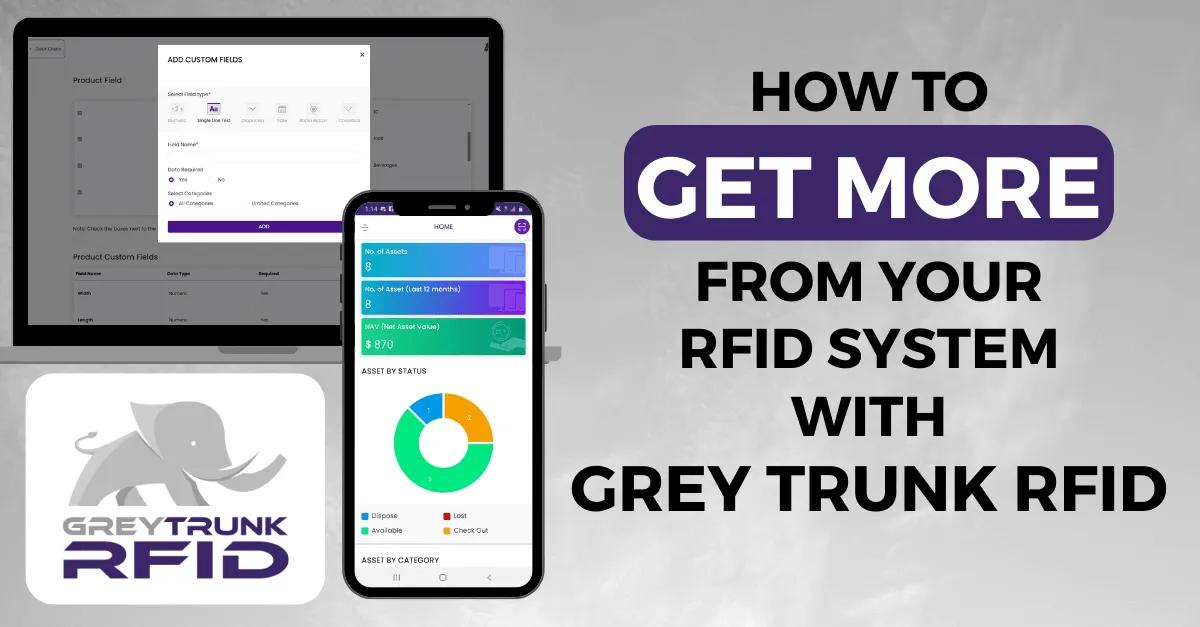
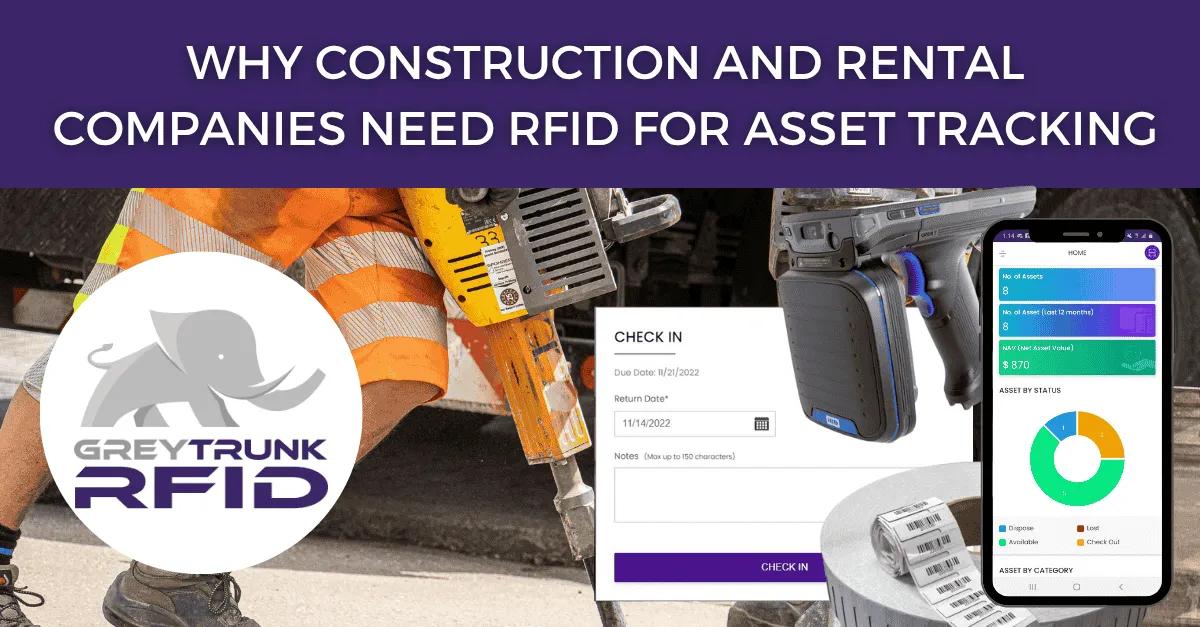
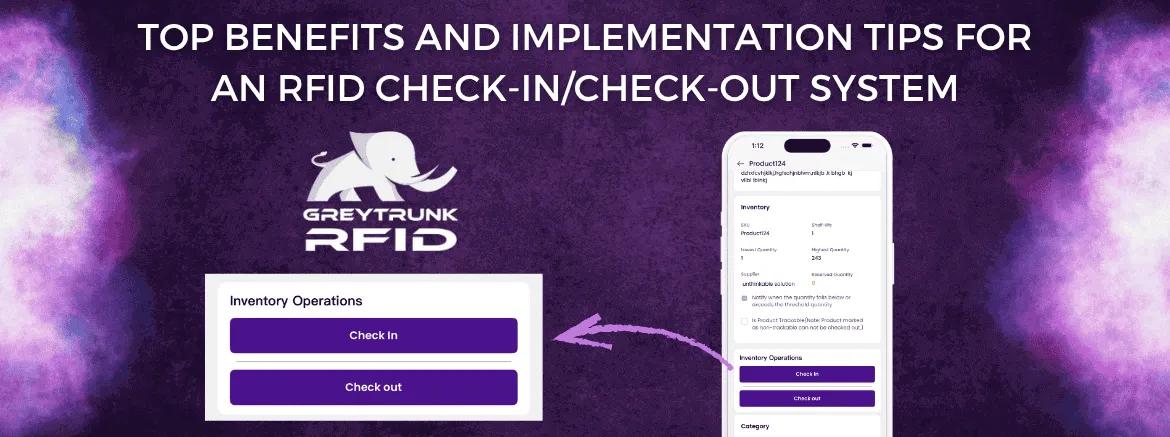
Grey Trunk RFID provides an accessible platform for organizations that need to manage assets using barcode and/or RFID technology, while QuickTrack supports inventory-oriented workflows. For applications that don't fit an off-the-shelf platform, custom software, hardware and system integration can address more specialized requirements.
What Are the Biggest Benefits of Real-Time Asset Tracking?
The key benefits ultimately come back to visibility.
When organizations have accurate information about their critical assets, they can spend less time searching, improve asset utilization, reduce loss, strengthen inventory accuracy, schedule maintenance more effectively and make better purchasing decisions.
In some healthcare implementations, reported returns have reached 275%. Other organizations have reported reductions in search time of up to 80%, asset loss of up to 90%, and substantial improvements in inventory accuracy.
Those numbers shouldn't be treated as guaranteed outcomes. Every environment, workflow and implementation is different.
The more useful question is what poor asset visibility is costing your organization today.
How much time is spent searching? How often is equipment repurchased because no one can find it? How much labor goes into inventory? How often does missing equipment delay work?
Answer those questions first, and the potential value of real-time asset tracking becomes much easier to calculate.
ARK Business Systems helps organizations evaluate those questions before recommending technology. Our Consultation & Needs Assessment process examines your assets, workflows, environment and business objectives to determine what type of tracking system makes sense.
Because the best asset tracking system isn't necessarily the one that collects the most data.
It's the one that gives your team the right information at the right time to streamline operations, reduce costs and make better decisions.